

Five coaching-informed techniques to fuel student persistence and completion
Essential elements of student coaching
Every institution or organization working in the higher education space has the ultimate goal of changing learners’ lives through the transformative power of completion. Getting to a degree or credential, however, first requires student persistence. According to the National Student Clearinghouse Research Center’s 2025 Persistence and Retention Report, the average persistence and retention rates have increased since last year, yet disparities due to age, race and enrollment status remain.
For example:
- First spring persistence was 67.4% for part-time students, compared to 92.1% for their full-time peers. By the second fall, that gap widens to 53.2% of part-time starters persisting.
- Younger students persist and retain at higher rates than older students.
- Hispanic, Black and Native American students persist at rates lower than the national average.
- Public and private 4-year institutions saw an increase in persistence year over year, while 2-year community colleges saw a slight decline.
These numbers remind us that a one-size-fits-all higher education retention strategy isn't enough. To close these gaps, student supporters must be as resilient and adaptable as the learners themselves. Having worked in higher education for over 25 years, InsideTrack has seen firsthand the power that a coaching conversation can have with a struggling learner — because each conversation is tailored to meet the learner exactly where they are.
Our coaches use the five elements of success coaching — a core foundation of our coaching methodology — to better connect with and empower learners to believe in themselves, take action, persist and ultimately complete their education.
These five elements include:
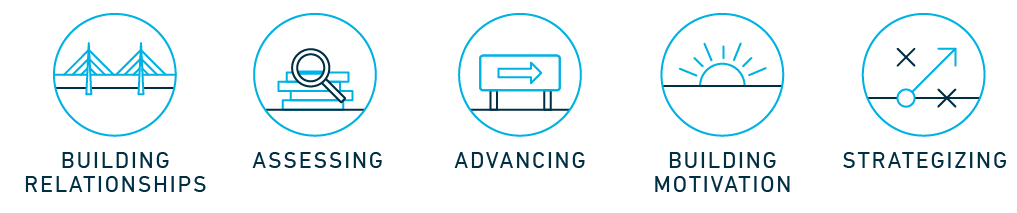
It's important to remember that these elements don't always happen in a perfect 1-5 order, nor do they always occur in every conversation. Coaches weave these techniques into any channel their learner prefers, whether face-to-face, over the phone, via email or through a quick text exchange.
Let’s dive deeper into each element and how you can use it to increase learner persistence and completion at your own institution.

Building Relationships
Building a human-to-human, authentic connection is critical for establishing trust in any relationship, but especially for student supporters looking to truly help their learners thrive. Trust sets the foundation that allows students to share their goals, challenges, lived experiences and reasons for pursuing an education.
Additionally, when coaches or other student supporters establish trust, that relationship only continues to grow, helping learners garner a sense of belonging within the institution. This sense of belonging can improve academic outcomes, increase retention, boost positive mental health and more.
Building meaningful relationships takes time, however. Instead of jumping straight into important meeting details, student supporters can:
- Demonstrate respect by listening actively and asking genuine, curious questions.
- Tailor communication specifically to that student. If you’re not meeting with a learner face-to-face, for example, they can tell when they’re receiving an automated script, so it’s important to make them feel seen as an individual rather than a caseload number.
- Share personal information appropriately. This is important for humanizing yourself as the supporter and creates a safe space for mutual growth and vulnerability.
- Summarize and narrate complicated processes during meetings to ensure students are clear on expectations and next steps.
Coaching in action: Building relationships with clear framing
Being up front about who you are and what your role is allows students to understand how they can work with you and will ultimately empower them to reach out proactively the next time they have a problem.
That’s where framing can help. A frame is a phrase used intentionally to guide or direct the conversation with a student. Frames can help set the agenda for the conversation and establish your role as a key supporter in their journey. Putting the fame in the form of a question — preferably an open-ended question — gives the learner the opportunity to drive the call and make sure it will be the best use of their time, making them feel heard and creating value in the conversation from the get-go.
“Imagine that the coach and student are standing in a long hallway filled with doors. Each door is a potential topic to discuss during the coaching session — an upcoming test, challenges at home, etc. The frame provides a guideline for the conversation. It makes sure both parties open the door to the same room,” explains former InsideTrack Success Coach Kristin Olson-Huddle.
Key takeaways for effective framing include:
- Starting with a frame to save time and ensure the learner receives clear value by the end of the interaction
- Setting up your introduction as an open-ended question to give the learner the opportunity to drive the conversation and prioritize what matters most to them
- Using active listening to pick up on overlooked topics and ensure no challenges are missed
Here are two examples of strong frames you can use in your conversations with learners:
- The collaboration frame: "As your coach, I’m here to collaborate with you on getting the most out of your educational experience. What would you like to prioritize today?"
- The active listening frame: "What I hear you saying is that your work schedule is making it tough to find study time. Tell me more about that..."

Assessing
Holistic student support is all about tailoring interventions to each individual by learning more about their specific goals, priorities and lived experiences. This assessment process helps you understand your learner’s values, as well as their “why” for being in school. This unique motivation can be something you tap into to help them persist through any challenges that may arise throughout their educational journey.
Student supporters can deepen their assessment practices by:
- Approaching each conversation with a curious mindset and asking questions to develop a clear picture of the student’s definition of success
- Using open-ended and closed questions intentionally based on the specific information you’re seeking
- Listening actively and asking follow-up questions to show the learner their voice is valued
- Listening for gap words like "should" or "supposed to" that highlight a disconnect between where they are and where they want to be
- Digging deeper to uncover a student’s most powerful level of motivation to help them stay on track
Coaching in action: Assess holistically using the Focus Wheel
Students are multi-faceted individuals who deserve support in their many roles and responsibilities that go beyond just academics. To do this, InsideTrack coaches use a tool called the Focus Wheel to assess across eight key areas: Academics, school community, commitment to completion, career, managing commitments, finances, effectiveness, and health and support. Ensuring conversations tackle these topics helps positively impact student resilience and retention.
Key takeaways for using the Focus Wheel include:
- Using this tool to see the full context, ensuring you’re going beyond grades to understand the professional and personal factors impacting a student’s journey.
- Showing students how stress in one area, such as finances, can impact other areas like academics or health. This can help them understand the root cause of their challenges.
- Identifying priorities and issues to create a plan before something becomes an obstacle to persisting in school.
- Focusing your collaboration on the most critical aspects of their journey.
For instance, try these two assessment questions to touch on different parts of the wheel:
- School community: "Beyond your classes, do you feel like you've found a sense of belonging or a group of people you connect with on campus?"
- Managing commitments: "With everything on your plate this week — including school, work and family — what is your top priority for your time?"

Advancing
Advancing is a critical phase that helps students move along their educational pathway. However, it’s also where many student supporters can get stuck. That’s why it can be meaningful to take the time to build a relationship and assess thoroughly before jumping straight to this stage.
Helping students identify clear next steps does more than just move them toward graduation. It helps them build confidence and reduce any stress associated with perceived barriers. Through advancing, student supporters are not just giving learners the answers they seek — instead, they’re helping them build the problem-solving skills they need to persist by identifying goals, navigating resources and following through on a concrete plan.
Student supporters can help learners advance in their educational career by:
- Working together to identify clear and achievable outcomes for their goals.
- Determining if the student needs direct recommendations or a brainstorming partner. Both approaches are appropriate depending on the scenario.
- Ending every meeting with specific next steps and a clear timeline for the student to take action.
Coaching in action: Use the GROW model
At InsideTrack, we use John Whitmore’s GROW model — Grow, Reality, Options, Will — to help learners break down an objective into actionable steps. This model promotes self-awareness and empowers students to uncover their own options for moving forward.
Key takeaways for using GROW:
- Build human potential by helping learners overcome obstacles while keeping them in charge of their own goals and future
- Bridge the gap by brainstorming together, helping them move from where they are now to where they want to be
- Ensure commitment by helping the learner identify what they’re truly willing to try in the next 24 hours to create immediate momentum
Try these GROW questions to guide your next conversation:
- G – Grow: “What do you want to accomplish today, and how will you know when you’ve successfully achieved it?"
- R – Reality: “On a scale of 1 to 10, how far have you come already? What has worked well for you so far?"
- O – Options: "Let's come up with eight options in two minutes. Write down anything that comes to mind, big or small."
- W – Will: "Of these options, which one are you willing to try? What is the very next thing you need to do to put this option in motion?"

Building motivation
Completing a degree is not easy, and it’s ok — and even encouraged — to remind students of this. What they’re doing is hard work, which is why helping them maintain motivation is critical to persistence. When you’re building motivation, you’re reminding students why they’re working so hard to stay in school and complete their credential.
Student supporters can build motivation within their learners by:
- Helping them define a clear vision for their future
- Connecting immediate actions, like studying for a difficult test, to short-term goals and long-term graduation/career targets
- Recognizing and celebrating progress, no matter how small the win
- Normalizing any challenges they may face
Coaching in action: Connecting learners’ goals to their core values
You can use the above assessment tips to tap into the deeper motivators that connect to a learner’s core values — principles or beliefs someone views as being of central importance in their life — and drive their decision-making. These values are often shaped by social norms, cultural backgrounds and unique lived experiences.
When a student is feeling stuck or questioning their decision to stay in school, come back to the reason they’re there. While "why" questions can sometimes make people feel defensive, you can uncover these motivators by asking “what” or “how” instead.
Try these two questions to help your learners build motivation:
- "How do you picture your life differently after attaining this degree?"
- "I know you’re interested in changing your career path. What would that new career path give you and your family?"

Strategizing
Strategizing is the behind-the-scenes work that ensures your coaching interactions are as efficient and impactful as possible. The magic of this element happens between student conversations; it’s the preparation that allows you to be truly present when the meeting begins.
By strategizing, you’re taking a proactive approach, letting your students know that you truly care about their success. This adds to relationship-building and increases the likelihood that learners will reach out to you when they encounter a challenge.
Student supporters can strategize by:
- Prioritizing students in their critical first year or those facing significant life transitions. Making sure these students feel seen and heard will increase feelings of belonging and ultimately retention.
- Experimenting with different communication methods to meet your students’ preferences. For example, an adult learner might prefer a quick text during their lunch break, while a first-generation student might value a scheduled video call to navigate a difficult class.
- Reviewing past notes to determine an initial area for assessment, while leaving enough room for curiosity so the student can still drive the conversation.
Coaching in action: Conduct a self-assessment for proactive support
Before you send an email or hop on a call with a student, take a moment to center yourself. This pause allows for self-assessment and helps ensure you're approaching the learner with the energy and focus they deserve.
Here are two concrete examples of strategizing questions you can ask yourself before a student conversation:
- What is my intention for this meeting? For example, "My goal is to help this student identify one study strategy for the upcoming midterm they’re nervous about."
- What gap am I listening for? For example, “Based on their last update, am I prepared to hear about challenges with child care or work-life balance?”
Fueling resilience through connection
By weaving these five elements — building relationships, assessing, advancing, building motivation and strategizing — into your daily interactions, you’re doing more than just providing information. You're leveraging a scalable, evidence-based coaching methodology that’s proven to improve student persistence. Remember, these aren't rigid steps that must be followed in a specific 1-5 order. They are flexible tools you can pull from as your students’ needs evolve.
True connection and impact can take many forms, whether it’s a 30-minute video session, a 10-minute phone call or a few supportive text messages back and forth. Being present and genuine — and showing up when it matters most — helps provide the stability and support our learners need to thrive.
At InsideTrack, we believe in the potential of every learner. By leading with empathy and staying rooted in a holistic student coaching approach, we can work together to move our mission forward and ensure every student has the resources and support they need to achieve their goals.
Learn more about our approach to coaching and how we work alongside partners to ensure every learner has the support they need to thrive.



Coaching solutions proven to advance all learners
Whether you’re looking to help students persist through completion or to improve career outcomes for job seekers and employees, our holistic coaching solutions can help you achieve meaningful outcomes.